


Knee Immobilizer Guide: When to Use It & How It Speeds Up Recovery
Sep 06, 2026
Recovering from a knee injury is not only about healing damaged tissue—it’s also about managing movement at the right time. In certain stages of recovery, controlling motion can be just as important as restoring strength. This is where a knee immobilizer is sometimes introduced as part of a broader protection strategy. Understanding its role helps patients make safer choices without relying on unrealistic expectations.
Why Temporary Knee Immobilization Is Sometimes Recommended for Protection
From a rehabilitation perspective, the knee is vulnerable during the early phase after injury or surgery. Swelling, pain, and reduced muscle control can increase the risk of unintended movement. In these situations, temporary immobilization may be used to limit excessive joint motion that could irritate healing structures.
A knee immobilizer is designed to keep the leg in a straight, supported position. Unlike flexible supports, it focuses on movement restriction rather than mobility assistance. This level of knee stabilization can help reduce mechanical stress on ligaments, tendons, or bone surfaces while the body adapts and inflammation gradually decreases.
It’s important to understand that immobilization is typically considered a short-term protective measure, not a replacement for rehabilitation or professional guidance.
Key Situations Where Added Stability Can Reduce Unwanted Knee Motion
Added stability is commonly considered when joint control is compromised. For example, after acute ligament injuries, the knee may feel unstable or prone to sudden giving way. In such cases, a knee brace for injury that limits motion can help reduce unpredictable bending during daily activities.
Post-operative recovery is another scenario where immobilization is often discussed. Keeping the knee aligned and extended may help protect surgical areas during early healing stages. Similarly, certain fractures or soft tissue injuries around the knee may benefit from reduced joint movement while swelling and discomfort are present.
In all cases, immobilization is about reducing risk—not accelerating healing beyond the body’s natural capacity.
How to Fit and Adjust a Knee Immobilizer for Safe, Effective Support
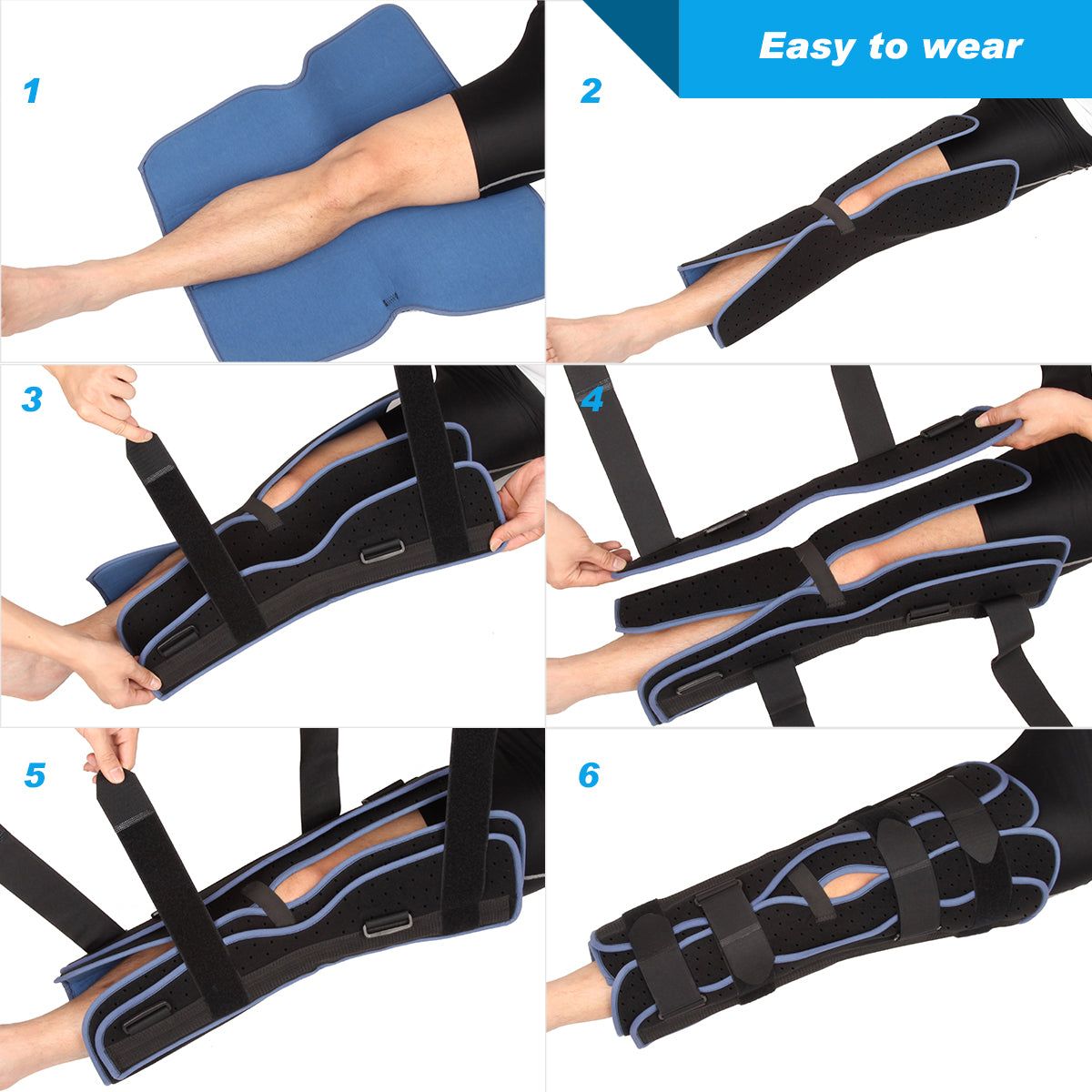
Proper fitting plays a key role in safe use. An adjustable knee immobilizer should align with the knee joint and extend adequately above and below it to distribute support evenly. Straps should be secured firmly but comfortably, avoiding excessive pressure that could interfere with circulation.
Because swelling levels can change throughout the day, adjustments may be needed. A well-fitted immobilizer should feel supportive without causing numbness or sharp discomfort. Regular checks ensure the device remains positioned correctly during movement or rest.
Correct use supports stability, but it does not replace attentive body awareness or activity modification.
Everyday Precautions to Avoid Overloading the Healing Knee
Even with external support, the healing knee remains sensitive to load and movement. Simple actions—such as standing up quickly, turning suddenly, or walking on uneven surfaces—can introduce unwanted stress. Maintaining controlled, deliberate movement is essential.
When advised by a healthcare professional, gentle range-of-motion or muscle-activation exercises may be incorporated to prevent stiffness and muscle deconditioning. External knee stabilization should be viewed as one part of a broader recovery approach that includes pacing, rest, and gradual reintroduction of activity.