


Beat Neck Stiffness and snoring: How a Comfort Neck Brace Keeps You Pain-Free
Sep 06, 2026
Neck stiffness and snoring are common issues that can interfere with daily life and quality of sleep. While they may seem unrelated, both can be influenced by posture, muscle tension, and cervical alignment. Using a comfortable neck brace as part of a supportive routine can help reduce strain and promote healthier neck mechanics.
Common Causes of Neck Stiffness and Snoring
Neck stiffness often arises from poor posture, prolonged sitting, or repetitive movements. Modern habits—like long hours at a desk, scrolling on smartphones, or sleeping in awkward positions—can strain cervical muscles and ligaments, leading to discomfort.
Snoring can also be linked to neck and airway alignment. When the head and neck are misaligned during sleep, muscles supporting the airway may relax improperly, increasing vibrations that cause snoring. While a neck brace is not a treatment for snoring itself, promoting proper cervical alignment can help reduce tension and support better sleep posture.
How a Comfort Neck Brace Provides Gentle Support
A neck support collar helps maintain the natural curvature of the cervical spine while reducing undue stress on muscles and ligaments. A soft collar for neck pain or a comfortable neck brace gently limits extreme motions without fully immobilizing the neck. This controlled support allows muscles to rest and recover, while still permitting functional movements like turning the head safely.
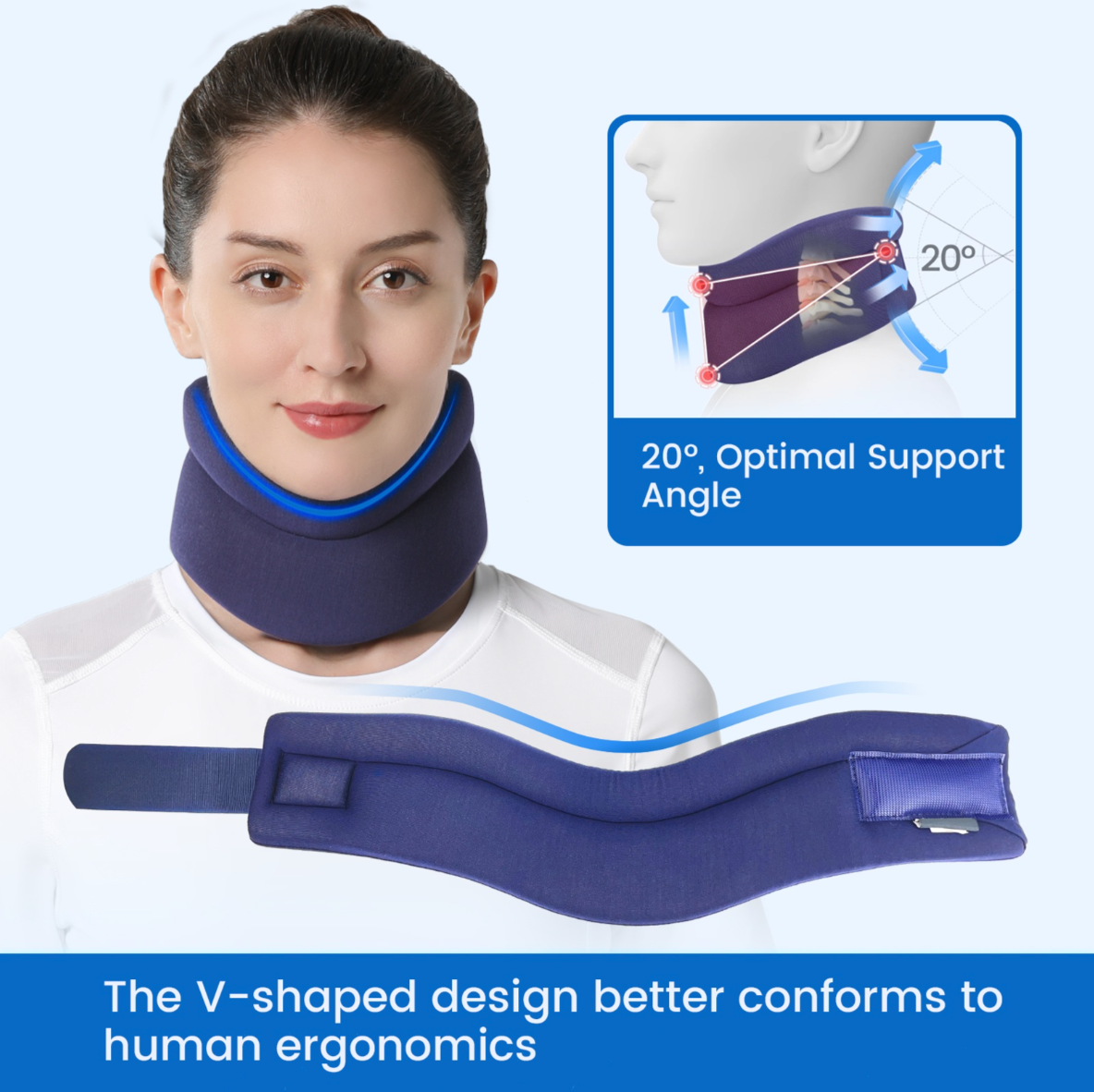
The brace’s cushioned structure ensures even pressure distribution, reducing localized fatigue and discomfort. Consistent use, especially during sleep or sedentary activities, can help prevent the accumulation of stiffness and soreness.
Maintaining Neck Mobility While Using a Neck Brace
One common concern is that wearing a neck brace may reduce flexibility. However, a properly designed brace encourages safe motion rather than complete restriction. Gentle movements, such as small head rotations, shoulder shrugs, or posture adjustments, can be performed while wearing a soft collar for neck pain. These movements help maintain circulation, prevent muscle atrophy, and promote comfortable neck mobility.
The goal is balance: protection when needed, without compromising natural movement. Selecting the most comfortable neck brace ensures that support does not interfere with daily tasks or sleeping habits.
Tips for Combining Brace Use with Proper Posture and Stretching
To maximize the benefits of a neck support collar, it should be integrated with posture awareness and light stretching:
- Keep screens and monitors at eye level to avoid forward head posture
- Take regular breaks from sitting or prolonged phone use
- Perform gentle neck stretches and shoulder rolls throughout the day
- Use pillows and ergonomic sleeping positions to maintain cervical alignment at night
These habits, combined with a comfortable neck brace, provide a comprehensive approach to reducing stiffness and improving neck comfort.