


Top Benefits of Using a Thumb Spica Brace for De Quervain’s Tenosynovitis
Sep 06, 2026
Pain on the thumb side of the wrist is more common than many people realize. One frequent cause is De Quervain’s tenosynovitis, a condition often linked to repetitive hand use rather than sudden injury. Understanding how tendon irritation develops—and how proper support can reduce daily strain—is an important step toward long-term hand care.
What Is De Quervain-Related Tendon Irritation? A Simple Anatomy Overview
De Quervain’s tenosynovitis involves irritation of two tendons that control thumb movement: the abductor pollicis longus (APL) and extensor pollicis brevis (EPB). These tendons pass through a narrow sheath at the wrist. When repetitive motion or prolonged gripping occurs, the surrounding tissue may become irritated, increasing friction during movement.
This irritation can make everyday actions—such as pinching, lifting, or twisting—feel uncomfortable. While symptoms vary from person to person, managing mechanical stress on these tendons is often a key focus in conservative care strategies.
How a Thumb Spica Brace Helps Reduce Mechanical Stress
One commonly recommended support tool is a thumb spica splint, designed to stabilize both the thumb and wrist in a neutral position. From a biomechanical perspective, limiting excessive thumb motion can help reduce repetitive loading on the affected tendons.
A well-fitted thumb stabilization brace works by:
- Restricting extreme thumb movements that increase tendon friction
- Supporting the base of the thumb and wrist alignment
- Encouraging more balanced hand mechanics during use
Rather than “fixing” the condition, a De Quervain’s brace functions as a protective aid—helping users manage strain while continuing daily activities more comfortably.
Daily Activities That Often Increase Thumb Strain
Many modern habits place repeated stress on the thumb and wrist without us noticing:
- Mobile phone use, especially one-handed scrolling
- Typing or mouse work with poor wrist positioning
- Household tasks like opening jars or lifting cookware
- Caregiving activities, including lifting children
Using a thumb immobilizer during high-use periods can help remind the hand to stay within a safer range of motion. Small adjustments—such as switching hands, taking breaks, or using ergonomic tools—can further support tendon-friendly movement patterns.
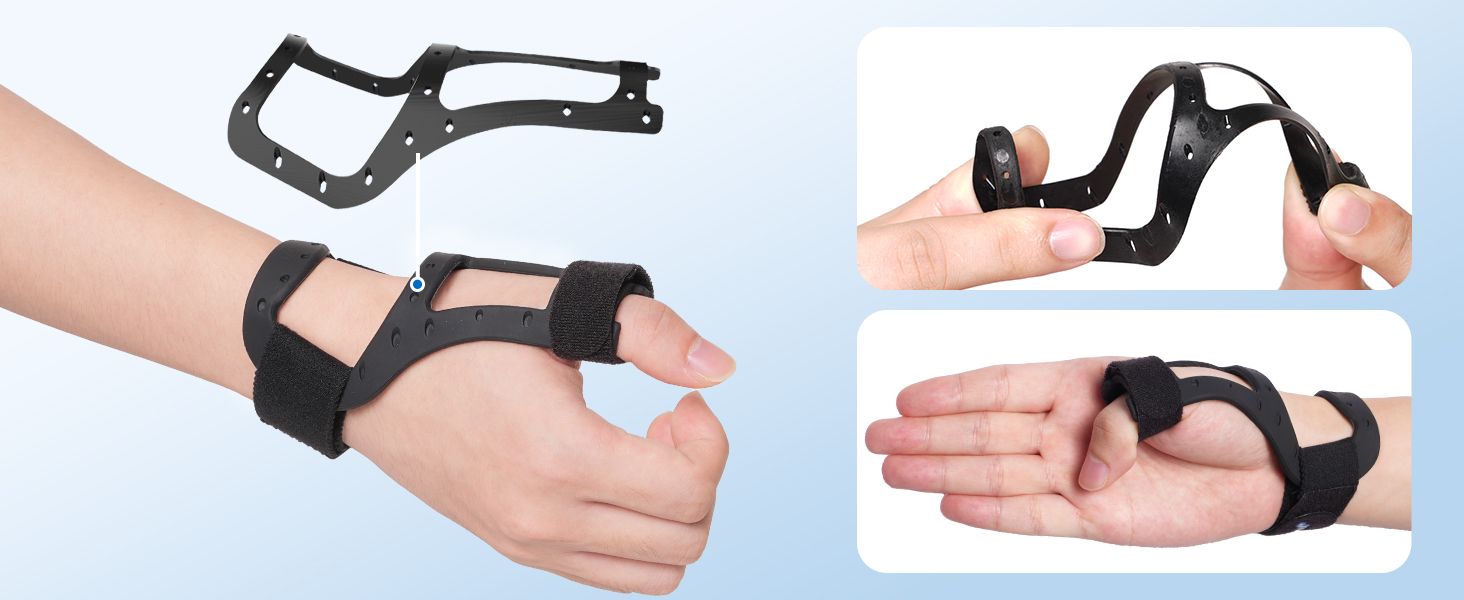
Wearing a Thumb Spica Brace Comfortably Throughout the Day
Comfort plays a major role in whether a brace is worn consistently. When choosing or wearing a CMC joint support brace, consider:
- Breathable, skin-friendly materials
- Adjustable tension that adapts to daily changes
- A low-profile design suitable for work or home use
The goal is not full immobilization, but controlled support that fits naturally into everyday routines. When used as part of a broader hand-care approach, a brace can serve as a helpful reminder to reduce overuse.