

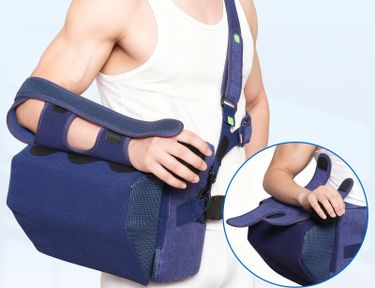
All You Need to Know About Shoulder Post-Operative Recovery
Recovering from shoulder surgery can feel challenging, especially when daily activities must be limited to protect the healing joint. Understanding proper post-operative care—including activity precautions, choosing the right support device, and setting realistic expectations—can make your post-op shoulder recovery safer and more comfortable. This guide shares medical-aligned knowledge without providing medical advice or guarantees, and offers practical insights to help you navigate each step.
What Are the Do’s and Don’ts After Shoulder Surgery?
Post-surgical healing requires protecting repaired tissues, managing pain, and preventing unnecessary strain. Following recommended precautions can help create a supportive environment for recovery.
✔ Do’s
- Wear your sling as directed. Appropriate shoulder immobilization helps maintain the correct healing position.
- Sleep in a protected posture. Many patients prefer a soft shoulder sling or reclined positioning to reduce nighttime discomfort.
- Use cold therapy when advised to help manage swelling.
- Begin surgeon-approved physical therapy when recommended—starting with gentle passive motion.
✘ Don’ts
- Avoid lifting, pushing, or pulling anything with the affected arm.
- Do not raise your arm overhead or reach behind your back early in recovery.
- Avoid sudden or uncontrolled movements.
- Do not remove your sling for extended periods unless cleared by your clinician.
These guidelines create a safe foundation for recovery by reducing stress on healing tissues without offering guaranteed outcomes.
Can I Let My Arm Hang After Shoulder Surgery?
In most cases, patients are advised not to let the arm hang freely in the first weeks after surgery. Allowing the arm to drop unsupported can increase tension on repaired tendons or the joint capsule.
This is why many clinicians recommend a shoulder abduction sling—it maintains a gentle separation between the arm and torso, reducing strain and helping the shoulder rest in a neutral, protected position. Using the sling as instructed provides structural support without promising specific medical results.
How to Choose the Best Shoulder Abduction Sling for Post-Operative Recovery
The right sling can improve comfort, reduce accidental strain, and support surgeon-guided restrictions. When evaluating options, consider these medically reasonable factors:
1. Required Level of Immobilization
Some surgeries, such as rotator cuff repairs, often require more controlled positioning. A sling with an abduction pillow helps maintain the recommended angle.
2. Comfort and Ergonomics
A good sling should distribute weight evenly, reduce pressure on the neck, and use breathable materials. A soft shoulder sling is beneficial for long hours of wear.
3. Nighttime Stability
Many patients find nighttime the hardest part of recovery. The best shoulder sling for sleeping should keep the arm secure without restricting circulation.
4. Functional Design
Look for:
- Adjustable straps
- A stable abduction cushion
- Breathable padding
- Lightweight, supportive structure
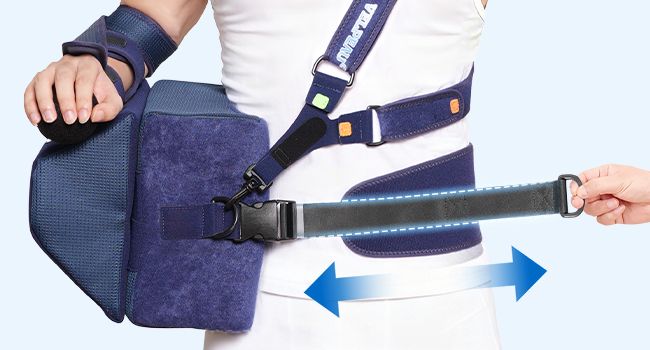
These features help maintain safe positioning but are not a substitute for clinical guidance.
How Long Does It Take to Recover After a Shoulder Operation?
Recovery varies depending on the type of surgery, your overall health, and adherence to rehabilitation instructions.
General timelines may include:
- 0–6 weeks: Protected healing with sling use
- 6–12 weeks: Gradual strengthening
- 3–6 months: Functional improvement
- 6–12 months: Return to full activity depending on individual progress
These ranges are general observations, patient experiences may differ.
A Supportive Tool for Your Rehabilitation Journey
During post-operative recovery, selecting the right immobilization device can make routine activities more manageable. When a clinician recommends an abduction sling, patients often look for options that balance comfort, stability, and usability in daily life.
The VELPEAU Shoulder Abduction Sling (Enhanced 30°–45°) offers features that align with common recovery recommendations:
- a stable abduction cushion to support protected arm positioning
- adjustable straps to accommodate different body shapes
- breathable materials for long wear
- a design that may help maintain comfort during both daytime use and rest
These features can complement a recovery plan without replacing professional medical advice.
Contact Us
US Company Address:
1211 Executive Dr East Richardson TX 75081
South Korea Company Address:
서울특별시 금천구 가산디지털1로 205-27,오1313호(가산동,가산에이1타워)
Thailand Company Address:
12 ซ.พัฒนาการ 41 ถ.พัฒนาการ แขวง/เขต สวนหลวงกรุงเทพมหานคร 10250

©2025 Velpeau All Rights Reserved.